
Puppies guide
Is daycare good for puppy socialization?
The short answer
Yes, for the right puppy, as one part of a bigger plan. Puppies are most open to new dogs, people, and places in roughly their first three months, and behavior vets recommend safe exposure before the vaccine series wraps up around 16 weeks. Well-matched daycare play adds regular dog time on top of puppy class and everyday outings.
Back in 2017, Savanna Means wrote that daycare was the secret ingredient for a dog-friendly puppy. The heart of that post still holds. We’ve refreshed it with what veterinary behavior experts say today, and fixed one thing we got wrong about vaccines.
What is the puppy socialization period?
It’s the short stretch early in life when a puppy is more curious than cautious. The American Veterinary Society of Animal Behavior (AVSAB) puts the primary window in the first three months, when sociability outweighs fear.
During those weeks, a puppy can take in new people, animals, sounds, and surfaces and file them under “normal.” AVSAB’s advice is to offer as many new experiences as you can safely manage, without piling on so much that the puppy shuts down. Signs you’ve overdone it include obvious fear, withdrawing, and trying to avoid the situation.
Why does socialization matter so much?
Because what a puppy misses, or learns to fear, early tends to stick. AVSAB links incomplete or poor socialization to a higher risk of fear, avoidance, and aggression later in life.
The stakes are real. According to AVSAB, behavior problems are the top reason dogs are surrendered to shelters, and a bigger threat to dogs under three than infectious disease. The 2017 post made the same point with a sidewalk example: one scary 18-wheeler roaring past can leave a puppy nervous about loud noises. Revisiting that kind of moment calmly, with good things attached, helps undo it.
Does a puppy need every shot before socializing?
No, according to behavior vets, but it does need a sensible plan. The old post said 12 weeks is when a puppy can have all of its vaccinations. That isn’t right, so here’s the correction.
- The core series runs to about 16 weeks. AAHA’s canine vaccination guidelines call for at least three doses of the combination vaccine (distemper, adenovirus, and parvovirus) between 6 and 16 weeks of age, spaced two to four weeks apart. Rabies follows the law, and your vet sets the exact schedule.
- Socialization shouldn’t wait for the last shot. AVSAB recommends socializing puppies before they’re fully vaccinated, because the window closes while the series is still underway. It says puppy classes can start as early as 7 to 8 weeks, with at least one set of vaccines given a week or more before the first class, a first deworming, and shots kept current throughout.
- Choose where carefully. AVSAB favors settings where the risk of illness can be kept low, such as classes that check vaccines and clean their floors. For places where the other dogs’ health is unknown, ask your vet.
Every daycare sets its own minimum age and vaccine rules. For ours, see our current requirements.
How does daycare help a puppy learn to be a dog?
It gives a puppy regular, repeated time with other dogs, and repetition is how social skills settle in. A good session is a chance to practice reading another dog, taking turns in a chase, and backing off when a playmate says “enough.”
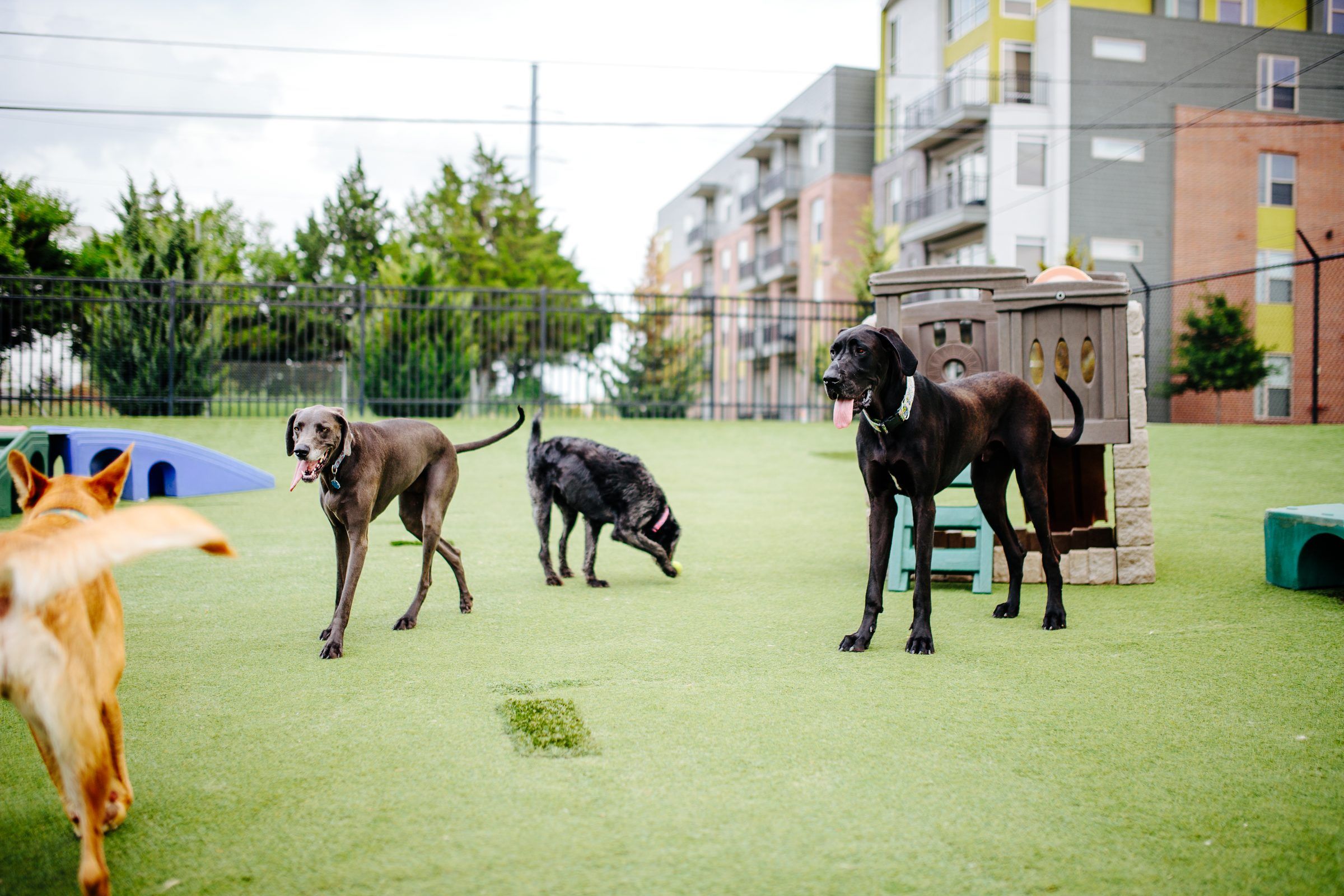
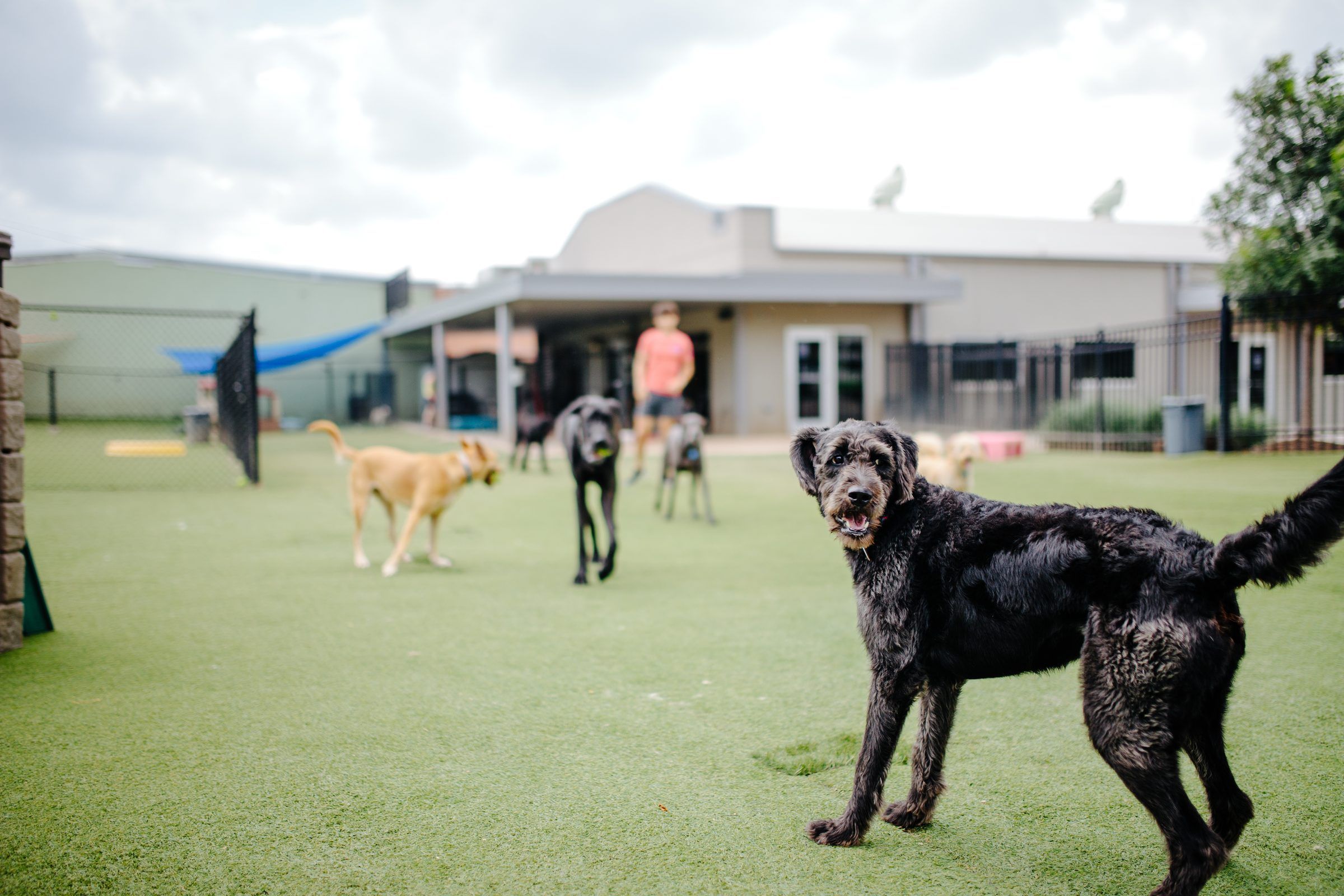
The quality of that play matters more than the quantity. Look for a daycare that matches dogs thoughtfully and watches the play closely, so it stays positive. At 9th Street Barking Lot, dogs are sorted into two playgroups by size, age, and temperament. Big roll-up garage doors stay open, so dogs move between the indoor room and the turf yard all day, with room to lie down in both. A puppy who needs a breather can take one.
What else should a puppy’s socialization include?
Daycare covers dog-to-dog time. A well-rounded puppy needs more than that, and AVSAB’s list is a good place to start:
- Handling. Get your puppy comfortable having every part of its body touched: paws, ears, mouth, and tail.
- People of every kind. Think hats, beards, strollers, kids, and neighbors with canes.
- New surfaces and obstacles. Grass, tile, grates, stairs, ramps, and anything that wobbles a little.
- Car rides. Short, frequent, and boring is the goal.
- Puppy class. Structured classes build training and social skills together.
- City noise. In downtown OKC, that means traffic, trucks, and the occasional loud patio, all taken at a distance first.
AVSAB also stresses that exposure shouldn’t stop when puppyhood does. Keep it going into adulthood so your dog stays outgoing.
What are the signs a puppy is overwhelmed?
Watch for fear, withdrawal, or avoidance, the signs AVSAB flags as overstimulation. A puppy that hides, freezes, or keeps trying to leave is telling you the experience is too much.
When that happens, don’t push through. Make the next exposure smaller: more distance, fewer dogs, and a shorter visit. Then end on a good note. Plenty of short, easy wins beat one big overwhelming day.
How 9th Street Barking Lot can help
If your puppy is ready for group play, our dog daycare in Automobile Alley is open Monday through Friday, 7am to 6pm A half day (under 5 hours) is $26 and a full day (5 hours or more) is $34, so you can start small. Check our requirements for age and vaccine rules, and read New clients for how the first visit works.
Quick questions
What age is the puppy socialization period?
The primary window is roughly the first three months of life, according to the American Veterinary Society of Animal Behavior. It doesn’t slam shut after that, though. Keep introducing new people, dogs, and places into adulthood.
Is a puppy fully vaccinated at 12 weeks?
Usually not. AAHA guidelines call for at least three doses of the core combination vaccine between 6 and 16 weeks of age, so the series typically finishes around 16 weeks. Rabies timing follows the law, and your vet sets the exact schedule.
Should I wait until my puppy is fully vaccinated to socialize them?
Behavior vets say no. AVSAB recommends starting socialization before the vaccine series is complete, in places where disease risk is managed, such as puppy classes that require at least one round of shots a week ahead.
How old does a puppy need to be for daycare at 9th Street Barking Lot?
Check the requirements page on our website for the current minimum age and vaccine rules, or call 9th Street Barking Lot at (405) 212-2220.